How to Get Rid of Crickets in Your House
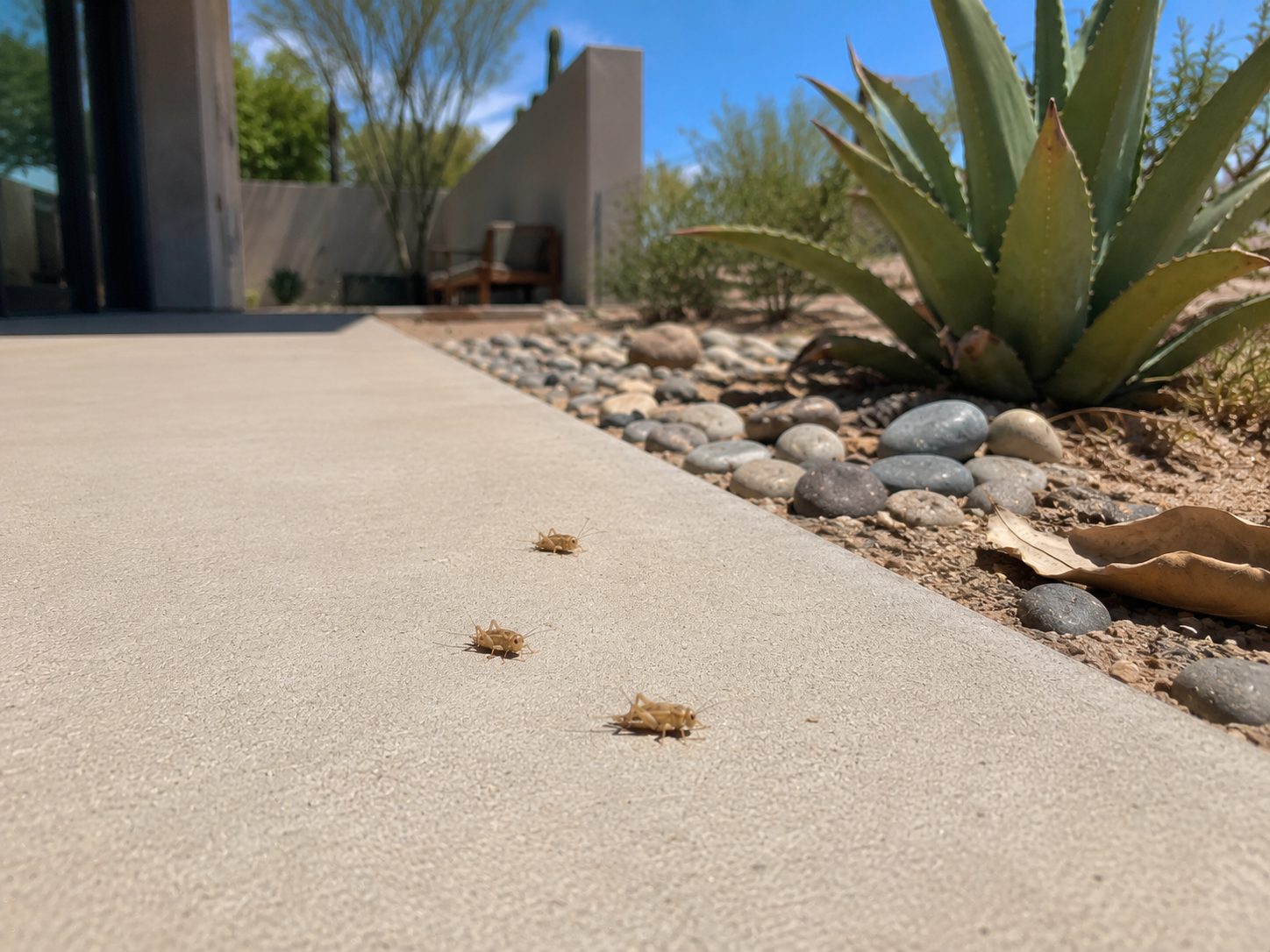
To get rid of crickets in your house, seal door gaps, reduce outdoor lighting that attracts insects, remove clutter and moisture near the foundation, and treat the exterior areas where crickets hide before they come inside. Killing the cricket you hear chirping tonight may help you sleep, but it will not solve the entry points that let more crickets in tomorrow.
In Arizona, cricket control matters because crickets are not just noisy. They are also food for scorpions, black widows, and other predators. Redline Pest Control treats cricket pressure as part of a larger exterior pest-control plan for East Valley homes.
Why crickets come inside Arizona homes
Crickets usually live outside. They hide in landscape rock, under debris, around patios, in garages, under door thresholds, and near moisture. At night, they may be attracted to lights near doors and windows. Once they get close to the home, worn door sweeps and garage gaps make entry easy.
University of Arizona pest resources note that Indian house crickets can live and reproduce indoors, while many field crickets are outdoor species that enter buildings through gaps around doors and weatherstripping. That lines up with what homeowners see: one or two crickets can be an entry issue, while repeated indoor cricket activity may mean there is a larger exterior pressure problem.
Step 1: Find where they are entering
Start with doors. Check the front door, garage door, patio slider, side garage door, and any door from the garage into the house. If you can see daylight under the door, crickets can probably get in. Replace worn sweeps and weatherstripping.
Then check the garage. Crickets often enter garages first and then move inside. Look at the corners of the garage door, expansion joints, stored cardboard, storage bins, and clutter along walls. If you hear chirping but cannot find the cricket, check behind boxes, appliances, shelving, and water heaters.
Step 2: Change the lighting pattern
Crickets and other insects can be drawn toward exterior lights. You do not have to live in the dark, but you can reduce pressure by turning off unnecessary lights, using motion lighting, moving bright lights away from doorways when possible, and keeping blinds closed at night near heavily lit windows.
Less insect activity near the home means less food for spiders and scorpions. That is why lighting adjustments are part of good general pest control, not just cricket control.
Step 3: Clean up exterior hiding spots
Walk the foundation and patio. Remove piles of leaves, dead plants, wood scraps, cardboard, and clutter. Trim vegetation away from the house. Keep landscape rock from piling high against the foundation. Check irrigation leaks and areas that stay damp.
Crickets like protected spaces. The more harborage you remove near the house, the less attractive your home becomes.
Step 4: Vacuum and monitor indoors
Inside, vacuum crickets when you see them. Check baseboards, closets, laundry rooms, garages, and under furniture. If the same room keeps getting crickets, that room probably has an entry point nearby.
Do not panic if you see one cricket. But if you are seeing them repeatedly, hearing them in the walls, or finding them in several rooms, you need to treat the source.
Step 5: Think about the food chain
This is the part homeowners miss: crickets feed bigger pest problems. Scorpions eat insects. Spiders and black widows benefit from insect activity. Roaches, ants, and crickets all use overlapping entry routes.
So if you are seeing crickets and scorpions at the same time, do not treat them as separate problems. Start with exterior pressure, sealing, prey reduction, and ongoing service.
When to call a pro
Call Redline Pest Control if crickets keep getting inside, if you hear chirping in walls or garages, if you see them around exterior doors nightly, or if cricket activity is paired with scorpion control, spider control, or roach sightings.
A professional cricket service may include exterior inspection, foundation treatment, garage-edge attention, advice on lighting and exclusion, and follow-up on high-pressure areas. For homes in Gilbert, Queen Creek, Chandler, and Mesa, that outside-in approach is usually more effective than chasing individual crickets.
CTA
If crickets are getting into your house, call or text 480-960-2010. Redline can help reduce the cricket activity around your home and the larger pest pressure that comes with it.
FAQs
Why are crickets getting in my house?
Crickets usually enter through worn door sweeps, garage gaps, patio sliders, and cracks near the foundation. Outdoor lights, moisture, and clutter can also draw them close to the home.
Are crickets harmful?
Crickets are mostly a nuisance, but they can chew fabrics or paper, make noise, and attract predators like spiders and scorpions.
Do crickets attract scorpions?
Yes. Scorpions feed on insects, and crickets are one of the prey pests that can support scorpion activity around a home.
When should I call Redline for crickets?
Call when crickets keep appearing indoors, when you hear them in walls or garages, or when you are also seeing scorpions, spiders, or roaches around the home.
Crickets keep coming back around your home?
See what Redline looks at, what to tell us before a visit, and what to ask about your quote.
Get Your Free Quote
Tell us about your home and we’ll text you a quote, usually the same day.
- No surprise door charges
- Pet- and family-friendly treatments
Request a Free Quote
We’ll get right back to you, usually the same day.